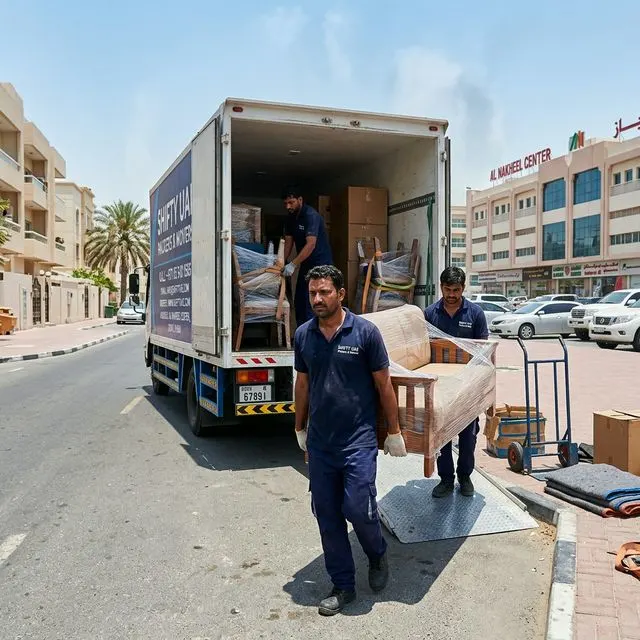
Summer Heat and House Moving in Dubai: What Actually Happens to Your Belongings
Written by Ali Khan | Dubai Operations Lead, Shifty UAE Ali Khan has managed residential relocations across Dubai since 2017, including summer moves in JLT, Discovery Gardens, Dubai Hills, Palm Jumeirah, and Arabian Ranches. He leads the operations team responsible for Shifty UAE's summer moving protocol.
Ask any family that has moved house in Dubai between June and September, and the answer is consistent: summer moving in Dubai is a different exercise entirely. It is not just physically demanding for the crew. It causes measurable, sometimes irreversible, damage to belongings that would otherwise survive any other time of year without issue.
Dubai's summer runs from June through to the end of September. During this period, midday temperatures regularly reach 44 to 47 degrees Celsius. Humidity near the coast frequently exceeds 80 percent. Metal surfaces left in direct sunlight can reach internal temperatures of 60 degrees or above. These are not discomfort conditions. They are conditions under which wood warps, electronics degrade, adhesives fail, and canvas artworks crack.
This guide covers exactly how Dubai's summer heat affects different categories of household belongings, how professional movers adapt their approach to summer conditions, and what residents should do before, during, and after a summer relocation to protect their possessions.
How Dubai Summer Temperatures Actually Damage Household Belongings
Most residents focus on the comfort of the moving crew when thinking about summer heat. The more significant concern, from a property perspective, is what sustained exposure to extreme temperatures does to the items being moved.
Wooden Furniture
Solid wood and engineered wood both respond to heat by expanding. In direct Dubai summer sunlight at 45 degrees Celsius, exposed wooden surfaces can warp visibly within 20 to 30 minutes. The problem is not just expansion, it is uneven expansion. If one face of a wooden cabinet or bed frame is exposed to direct sunlight while the opposite face remains shaded, the differential expansion causes the wood to twist and buckle permanently.
European and Scandinavian furniture designs are particularly vulnerable. Wood that has been dried and finished for temperate climates contains a different moisture content than wood acclimatised to Gulf conditions. The rapid moisture loss caused by Dubai's summer heat accelerates warping significantly compared to furniture manufactured or purchased locally.
Engineered wood products, including many IKEA furniture pieces, contain adhesive layers between wood composites. These adhesive layers soften and delaminate under prolonged heat exposure, causing structural failure at joints that were previously stable.
Electronics and Smart Devices
Consumer electronics operate within defined temperature ranges. Most smartphones, laptops, gaming consoles, and smart televisions have maximum operating temperatures of 35 to 40 degrees Celsius. Exposure above these thresholds causes several distinct failure modes.
Lithium-ion batteries degrade rapidly when heated above 40 degrees Celsius. Battery capacity reduces permanently, and in extreme cases, thermal expansion within the battery casing can cause physical damage to the surrounding device components. This type of damage is not covered by standard manufacturer warranties because it constitutes environmental damage rather than a product defect.
Screen discolouration is a common result of heat exposure in LCD and OLED displays. The liquid crystal layers within an LCD screen can lose their alignment properties permanently when heated to extreme temperatures. OLED screens can develop permanent burn-in patterns when exposed to sustained heat above manufacturer thresholds.
Motherboard and circuit board damage occur when solder joints expand and contract repeatedly under thermal stress. A single extreme heat event during an unprotected move can introduce micro-fractures in solder connections that cause intermittent faults weeks after the move, making the root cause difficult to identify.
Artworks, Canvas Paintings, and Frames
Canvas artworks are among the most heat-sensitive items in any home. A canvas stretched over a wooden frame responds to heat in two simultaneous ways. The canvas material, typically linen or cotton, contracts slightly in extreme heat. The wooden stretcher frame expands. This opposing movement creates tension across the painted surface.
In oil paintings, this tension manifests as cracking across the paint layer. Oil paint that has been sitting for years or decades has lost its flexibility. The cracking caused by a single summer move is permanent, and restoration is expensive. In acrylic paintings, the damage is typically less severe because acrylic mediums retain more flexibility, but discolouration from heat exposure is still possible.
Picture frames with adhesive backing, including many poster frames and ready-made frames, can separate under heat exposure. Metal frames expand and can warp slightly if exposed to direct sunlight for extended periods.
Upholstered Furniture and Leather Items
Leather sofas and chairs are particularly vulnerable to summer sun exposure during a move. Natural leather contains oils that maintain its suppleness. Prolonged direct sun exposure causes rapid oil evaporation, leaving the leather dry and prone to cracking. Light-coloured leather can also develop permanent UV discolouration during even a short unprotected transit.
Vinyl-coated furniture behaves similarly to leather but is more prone to surface bubbling when heated rapidly. Many budget sofas and chairs use vinyl coatings that begin to separate from the underlying fabric at temperatures above 50 degrees Celsius.
Fabric sofas retain heat internally after exposure. A sofa that has been in a hot moving truck for 90 minutes can remain uncomfortably warm to the touch for several hours after delivery, even in an air-conditioned room.
Paper, Books, and Document Archives
Paper becomes significantly more brittle as temperature and humidity interact during summer conditions in Dubai. The pattern of extreme outdoor heat followed by contact with cooled air-conditioned spaces creates condensation cycles that cause paper to expand, warp, and in severe cases, develop mould in the weeks following a move.
Financial documents, legal paperwork, and archival materials should be treated as priority items during a summer move. Books with cloth or paper spines can develop spine damage from heat exposure that is visible as warping or separation at the binding.
The metal walls of a standard moving truck parked in the Dubai summer sun can reach internal temperatures of 60 degrees Celsius or above within 30 minutes without active ventilation. Documents or books placed against these walls without insulation are among the highest-risk items in any summer move.
Why Move Timing Is the Most Important Decision You Will Make
The single most effective action a resident can take to protect their belongings during a summer Dubai house move is to control the timing of the move window.
The recommended loading window for summer moves in Dubai is between 5:00 AM and 9:00 AM. At 5:00 AM, ambient temperatures in Dubai typically range from 32 to 36 degrees Celsius warm by any international standard, but manageable for both crew performance and belongings protection. By 10:00 AM, temperatures are climbing above 40 degrees. By noon, outdoor conditions in Dubai during summer present a genuine health risk for outdoor workers, alongside a significant risk of heat damage to belongings.
The UAE Ministry of Human Resources enforces the Summer Working Hours decree annually, prohibiting outdoor work between 12:30 PM and 3:00 PM from June 15 to September 15 each year. This regulation exists for worker health and safety. For residents planning a summer move, this regulation also serves as a useful marker: any professional moving company that plans to conduct heavy outdoor loading and unloading work during the midday hours in summer is not operating in compliance with UAE labour law.
A move that begins loading at 5:00 AM can realistically complete unloading at the destination by 10:00 AM for a one to two-bedroom apartment, leaving all placement, assembly, and unpacking to be completed within an air-conditioned environment.
How Professional Movers Adapt to Dubai Summer Conditions
A professional moving company operating in Dubai during the summer does not simply apply its standard process in higher temperatures. Specific procedural adaptations are required to maintain both crew safety and belongings protection.
Pre-Cooling the Transport Vehicle
A moving truck parked in direct Dubai summer sun for 30 minutes develops an internal cargo temperature significantly above the ambient outdoor temperature. Metal absorbs and retains heat rapidly. A professional moving company runs cargo ventilation and air circulation in the vehicle before loading begins to bring the internal temperature down to a level where belongings are not immediately exposed to extreme heat upon loading.
Enhanced Protective Wrapping
Standard furniture blankets provide a degree of insulation against heat as well as mechanical protection. For summer moves, additional wrapping layers on wooden furniture, a double layer of wrapping on upholstered items, and foam-insulated boxing for electronics provide meaningful protection against heat transmission during transit.
All wooden furniture should be wrapped in moving blankets before any exposure to outdoor conditions. Electronics should be in sealed, foam-lined boxes before they leave an air-conditioned interior.
Coordinated Destination Pre-Cooling
Wherever possible, the destination property should be air-conditioned to a stable temperature before unloading begins. A property that has been closed and unoccupied during the Dubai summer can reach internal temperatures approaching 40 degrees Celsius. Unloading belongings into an environment at that temperature offers no improvement over the truck. Coordinating with building management or the outgoing tenant to ensure air conditioning is running in the destination property before the crew arrives is a standard component of professional summer move planning.
Appliance Stabilisation After Transit
Refrigerators, washing machines, and air conditioning units that have been transported horizontally or have been in transit in summer heat require stabilisation time before being switched on. For refrigerators, a minimum of four hours upright and unpowered allows compressor oils that may have shifted during transit to return to their correct positions. Switching a refrigerator on immediately after a summer transit is one of the most common causes of compressor failure following a move.
Community-Specific Summer Moving Challenges in Dubai
Different Dubai communities present distinct logistical challenges during summer conditions that affect move planning and timing.
Dubai Marina and JLT
Service elevator slots are finite and heavily contested in large residential towers. Waiting for elevator access while standing in the outdoor loading area in summer heat adds both time and physical stress to the move. Pre-booking the service elevator 48 to 72 hours before the move is essential. Many tower buildings in Dubai Marina and JLT restrict service elevator access to specific time windows, making early morning scheduling alignment critical.
Palm Jumeirah
Gate pass requirements for the Palm Jumeirah front and tower communities add processing time that must be factored into summer move planning. Gate passes for Palm Jumeirah moves during the summer should be applied for at least three to four days before the move date to ensure approval before move morning. Any delay at the gate in summer conditions, with a loaded truck waiting in direct sun, introduces both crew health risk and belongings exposure risk.
Discovery Gardens and International City
Older building stock in these communities means service elevator coverage is inconsistent across blocks. Summer staircase carries moving heavy furniture and boxes up flights of stairs in 45-degree heat are among the most physically demanding conditions a moving crew faces. Summer moves in these communities typically require additional crew members and are planned with shorter carry distances per person and more frequent rotation.
Dubai Hills Estate and Jumeirah Park
Villa moves in these communities involves outdoor carries across paths and driveways that can be substantial distances. In summer conditions, these outdoor exposure windows, even brief ones, contribute to heat accumulation in belongings. Early morning timing for villa moves in these communities is not a preference. It is a requirement for any responsible summer move planning.
Arabian Ranches
Gated community access protocols require vehicle pre-registration and crew ID submission before move day. Delays caused by incomplete documentation are manageable in cooler months. In summer, a crew and truck held at the Arabian Ranches gate for 30 to 45 minutes while documentation issues are resolved represents a meaningful belongings exposure event. Permit documentation for Arabian Ranches summer moves should be submitted four to five days in advance.
What Residents Should Do Before a Summer Dubai Move
Beyond selecting a professional moving company with a summer-adapted protocol, there are specific actions residents can take to reduce heat-related risk to their belongings.
Disassemble Furniture the Evening Before
Furniture that is disassembled the evening before the move can be wrapped and protected indoors, in air-conditioned conditions, before the move morning begins. This eliminates the exposure risk created by disassembling furniture in outdoor or partially outdoor conditions during the move itself.
Prepare an Electronics Box Separately
Pack all electronics, laptops, tablets, gaming consoles, cameras, and smart home devices into a single clearly labelled box with foam insulation the night before the move. This box should travel in the climate-controlled cabin of the truck rather than the cargo area, wherever possible, and should be the first item unloaded and placed in an air-conditioned space at the destination.
Empty and Defrost Refrigerators 24 Hours in Advance
A refrigerator that has been defrosted and emptied 24 hours before the move is significantly easier to handle safely during a summer transit. Residual moisture from a refrigerator that has not been fully defrosted creates condensation issues during transport in summer conditions and adds unnecessary weight.
Document High-Value Items Before the Move
Photograph all furniture, artwork, and electronics before the move, capturing any existing scratches, marks, or damage. These photographs are timestamped and provide the baseline documentation needed if any damage claim is required after the move.
Confirm DEWA Activation and Destination Air Conditioning
Ensure that your DEWA account is active and electricity is connected at the destination property before move day. An air-conditioned destination property is not a comfort preference during a summer move. It is a functional requirement for protecting belongings during unloading.
Frequently Asked Questions
What temperature does it reach inside a moving truck during the Dubai summer?
A moving truck parked in direct Dubai summer sunlight for 30 minutes can develop internal cargo temperatures of 55 to 65 degrees Celsius. This is significantly above the ambient outdoor temperature because metal absorbs and concentrates solar radiation. Professional movers run cargo ventilation before loading to reduce this figure, and minimise the time belongings spend inside the cargo area before and after transit.
What is the best time of day to move house in Dubai during summer?
The safest and most effective window for loading during a summer house move in Dubai is between 5:00 AM and 9:00 AM. This window keeps the move within manageable temperature ranges for both the crew and belongings, and allows most standard apartment moves to complete unloading before peak heat conditions at midday. The UAE Summer Working Hours decree prohibits outdoor labour between 12:30 PM and 3:00 PM from June 15 to September 15, which frames the upper boundary for any outdoor moving work during this period.
Can Dubai summer heat permanently damage electronics during a move?
Yes. Sustained exposure to temperatures above 40 degrees Celsius can cause permanent battery degradation in smartphones, laptops, and tablets. LCD and OLED screens can develop permanent discolouration at extreme temperatures. Circuit board solder joints can develop micro-fractures under thermal stress that cause intermittent faults in the weeks following a move. Electronics should be packed in foam-insulated boxes and kept in climate-controlled environments throughout a summer move.
Does wooden furniture always warp during the Dubai summer moves?
Not if it is properly protected. Wooden furniture that is wrapped in thick moving blankets before leaving an air-conditioned environment, transported in a pre-cooled truck, and moved during the early morning window is unlikely to sustain heat warping. The risk is created by unnecessary outdoor exposure, leaving wrapped or unwrapped wooden pieces in direct sun on a pavement or driveway while the truck is loaded, or transporting them in an unventilated cargo area during midday hours.
How long should I wait before turning on appliances after a summer move?
Refrigerators should remain upright and unplugged for a minimum of four hours after transit before being switched on. Washing machines can generally be connected and operated after a one to two-hour stabilisation period. Air conditioning units that have been disconnected and transported should be inspected by a qualified technician before reconnection, as refrigerant lines can develop issues during transport that are not visible externally.
Is it safe to move leather furniture during the Dubai summer?
Leather furniture can be moved safely during the Dubai summer if it is wrapped completely in moving blankets before any outdoor exposure and transported in a ventilated cargo area. The risk is direct sunlight contact, which causes rapid oil evaporation and cracking. Leather items should never be placed in direct sunlight on a pavement or loading dock, even briefly, during summer conditions.
Does the UAE have rules about moving companies working in the summer heat?
Yes. The UAE Ministry of Human Resources enforces the Summer Working Hours decree annually from June 15 to September 15. Under this regulation, outdoor work is prohibited between 12:30 PM and 3:00 PM during this period. Any moving company conducting loading or unloading operations during these hours in the summer is operating outside UAE labour law compliance. When booking a summer move, confirm with the company that their crew schedule complies with this regulation.
How much does a summer move in Dubai typically cost compared to off-peak months?
Summer moves in Dubai from professional licensed companies typically carry a modest premium over off-peak pricing, reflecting the additional crew requirements, extended preparation time, enhanced protective wrapping materials, and early morning scheduling that summer protocol demands. The premium is generally in the range of 10 to 15 percent above standard pricing. This is significantly less than the cost of repairing or replacing heat-damaged furniture, electronics, or artwork.
Summer House Moving in Dubai: Key Takeaways
Summer relocations in Dubai are manageable when approached with the right preparation, professional support, and realistic planning.
The most important decisions are timing, loading must begin by 5:00 AM to 6:00 AM at the latest for most moves, and protection; all wooden furniture, electronics, and sensitive items must be wrapped and insulated before leaving an air-conditioned environment.
The most common causes of damage during Dubai summer moves are unnecessary outdoor exposure, unventilated cargo areas, insufficient protective wrapping, and delays caused by incomplete permit or documentation preparation that leave crews and belongings waiting in the heat.
A professional moving company operating in Dubai during the summer should be able to describe its specific summer protocol in detail before you confirm a booking. Questions about truck pre-cooling, wrapping standards, crew scheduling in compliance with the Summer Working Hours decree, and timing of the move window are all reasonable and appropriate to ask.
About the Author
Ali Khan, Dubai Operations Lead, Shifty UAE
Ali Khan has led local moving operations at Shifty UAE since 2017, managing residential relocations across Dubai's 18 major communities throughout all seasons, including multiple summer periods. His operational experience covers studio apartment moves in International City and Discovery Gardens through to five-bedroom villa relocations in Palm Jumeirah and Arabian Ranches. He developed Shifty UAE's summer moving protocol based on observed heat damage patterns and crew performance data across multiple summer seasons.
Shifty UAE is a fully licensed and insured moving company operating from Al Nakheel Center, Deira, Dubai. +971 52 540 1585 | info@shiftyuae.com | shiftyuae.com
Related Articles
- Moving Cost Calculator Dubai | Estimate Your Charges
- House Shifting Services in Dubai | Complete 2026 Guide
- Expert House Shifting in Dubai: Stress-Free Guide
- How to Protect Fragile Items During House Shifting in Dubai
- House Shifting Services in Dubai: Complete Moving Guide
- Moving in Dubai? Rules, Permits & Ejari Guide (2026)
- Moving Heavy Appliances in Dubai: Safe Shifting Guide
- What to Expect on Move-In Day: Dubai Shifting Guide
- Client Stories: Best Home Moving in Dubai 2026