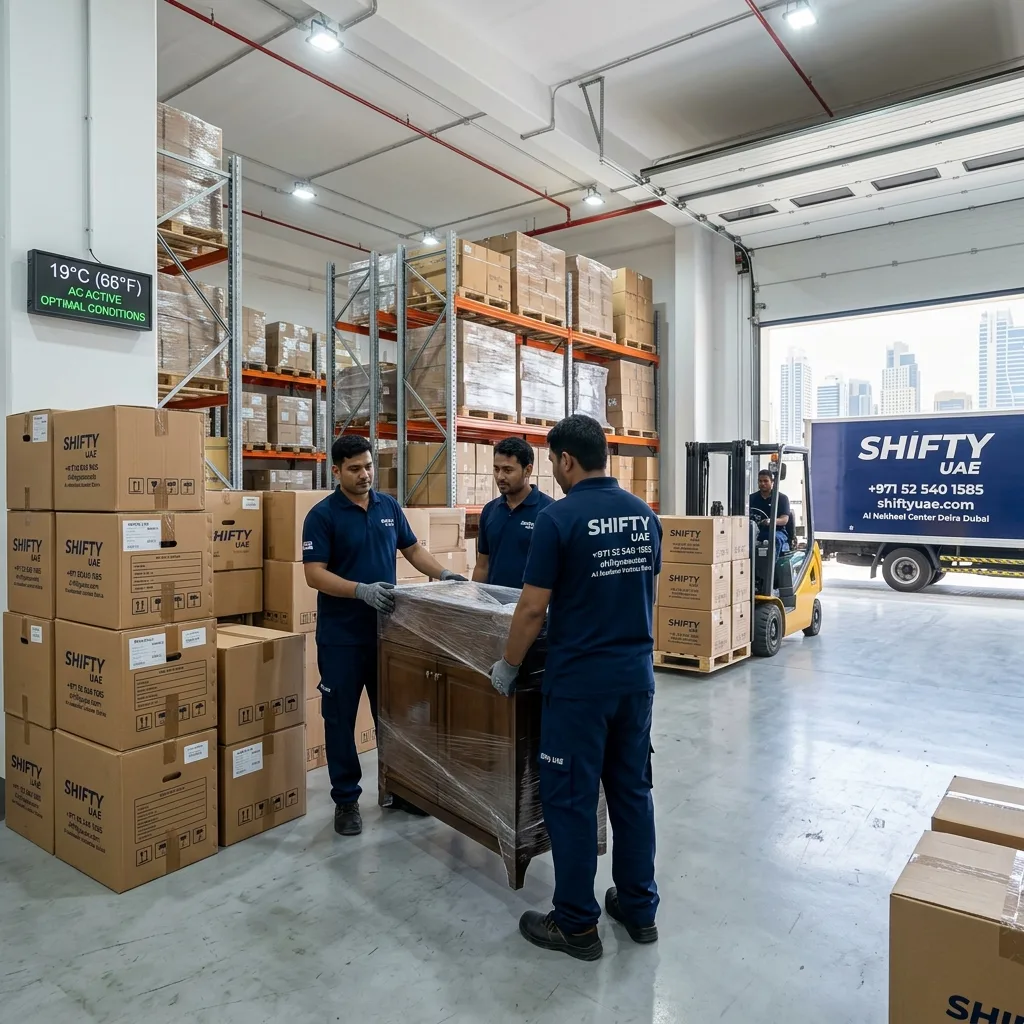
Moving and Storage in Dubai: Why Climate Control Matters
Written by Ali Khan | Senior Moving Consultant, Shifty UAE Ali Khan has over 7 years of experience managing residential relocations and Storage Solutions across Dubai, advising clients on protecting furniture, electronics, and high-value belongings during transit and long-term storage in the UAE climate conditions.
This article was last reviewed and updated in June 2026 to reflect current storage facility standards and UAE climate data.
Dubai's climate is one of the most demanding storage environments in the world. According to the UAE National Center of Meteorology, summer ground and surface temperatures across the Emirates regularly exceed 45 degrees Celsius, with humidity along the coast frequently surpassing 80 percent during peak summer months. These conditions create a genuinely difficult environment for storing furniture, electronics, and household belongings without proper protection.
For residents between leases, expats travelling internationally for extended periods, or families downsizing, the decision about where and how to store belongings in Dubai has real practical consequences. This guide explains what climate-controlled storage involves, how heat and humidity affect different categories of household items, and what to look for when evaluating a storage provider in Dubai.
How Heat Affects Storage Conditions in Dubai
Understanding the basic physics of storage conditions in Dubai's climate helps explain why temperature regulation matters for certain materials more than others.
Heat Accumulation in Unventilated Spaces
Metal structures exposed to direct sunlight absorb and retain heat efficiently. Industry guidance from the American Society of Heating, Refrigerating and Air-Conditioning Engineers (ASHRAE) on storage and warehousing conditions notes that enclosed metal structures without active climate management can reach internal temperatures significantly above ambient outdoor readings, particularly in high direct-sunlight environments such as the Gulf region. This is the underlying reason why storage facilities marketed as having "ventilation" or "fans" alone are not equivalent to genuine climate control, as circulating warm air does not reduce the underlying heat load.
Material-Specific Effects
Wood furniture is particularly sensitive to rapid moisture loss. Solid wood contains natural moisture that keeps it structurally stable. The Forest Products Laboratory, a research division of the US Forest Service, has published extensively on wood moisture content and its relationship to environmental humidity, noting that wood expands and contracts in response to surrounding humidity levels and that rapid, uneven moisture loss is a primary cause of warping and splitting in solid wood furniture.
Leather responds differently across seasonal conditions. Natural oils within leather maintain its flexibility. Extended heat exposure accelerates oil evaporation, leading to dryness and eventual cracking. In humid conditions, leather and other organic materials become vulnerable to mould growth when moisture is trapped without adequate air circulation.
Electronics carry manufacturer-specified storage temperature ranges. Most consumer electronics manufacturers, including major laptop and smartphone brands, specify maximum storage temperatures in their product documentation, typically in the range of 35 to 45 degrees Celsius, depending on the device. Storage conditions exceeding these manufacturer specifications fall outside the warranty-protected operating envelope and carry a measurable risk of battery degradation and component stress.
Paper and artwork are sensitive to both heat and humidity cycling. Repeated expansion and contraction caused by temperature swings between hot daytime conditions and cooler evening conditions is a recognised contributor to paper brittleness and the cracking of paint layers in framed artwork.
Standard Storage vs Climate-Controlled Storage in Dubai
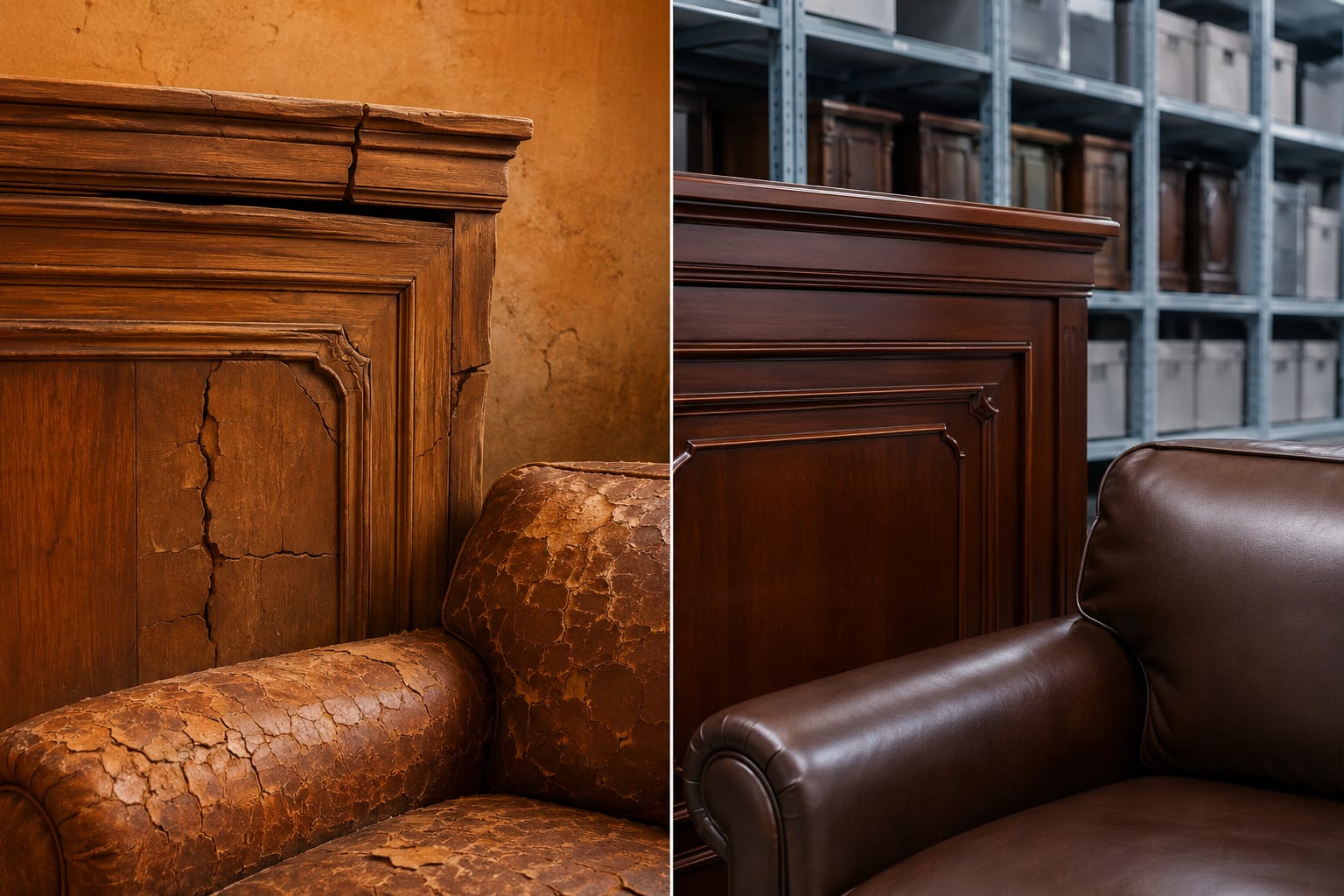
The table below summarises the practical differences between standard and climate-controlled storage options available in the Dubai market.
Factor | Standard Storage | Climate-Controlled Storage |
|---|---|---|
Temperature range | Follows ambient conditions, can exceed 50°C in summer | Maintained between 18°C and 22°C year-round |
Humidity control | Not regulated | Regulated, typically 45–55% relative humidity |
Suitable for wood furniture | Higher risk of warping over time | Low risk with proper preparation |
Suitable for electronics | Not recommended for extended storage | Suitable within manufacturer guidelines |
Suitable for leather/upholstery | Risk of drying, cracking, or mould | Low risk with proper preparation |
Dust and pest exposure | Higher, depending on the facility | Lower in sealed, filtered units |
Typical monthly cost (Dubai) | From approximately AED 300 | From approximately AED 500 |
Best suited for | Short-term storage of durable, non-sensitive items | Furniture, electronics, artwork, leather, and long-term storage |
What Genuine Climate-Controlled Storage Should Include
The term "climate-controlled" is used inconsistently across the Dubai storage market. The following specifications represent what a genuinely climate-controlled facility should be able to confirm.
Temperature Range
A facility should be able to state the specific temperature range it maintains and explain how this is monitored. A range of 18 to 22 degrees Celsius is generally recommended for protecting furniture, electronics, and artwork, consistent with the storage and display guidance published by museum and archival conservation bodies for sensitive materials.
Humidity Regulation
Active dehumidification, not simply air cooling, is required to manage humidity independently of temperature. A facility should be able to describe its humidity management approach specifically rather than referring generally to "air conditioning."
Filtration and Pest Management
Sealed environments with filtered air handling reduce dust penetration, which is a relevant consideration in Dubai given the fine particulate composition of regional desert sand. Sealed, temperature-stable environments are also less hospitable to common pest species than open or ventilated warehouse spaces.
Short-Term vs Long-Term Storage Requirements
The appropriate storage approach depends on the expected duration and the nature of the items being stored.
Short-Term Storage (One to Three Months)
Short-term storage is commonly required to bridge the gap between move-out and move-in dates. For this duration, items can generally remain in the protective packing applied during the move itself, such as moving blankets, carton boxes, and bubble wrap.
When storage is bundled with a moving service, the same team that packs and loads the origin property handles delivery to the storage facility and subsequent delivery to the destination, which can reduce the handling steps involved compared with coordinating two separate providers.
Questions to confirm for short-term storage:
- What is the minimum storage period, and are partial months prorated?
- What is the access policy during the storage period?
- What insurance coverage applies, and what is the claims process?
Long-Term Storage (Six Months or More)
Long-term storage requires more thorough item preparation. The following preparation steps are widely recommended by storage and relocation industry guidance for extended storage periods:
- Leather furniture benefits from cleaning and conditioning before storage to maintain flexibility
- Electronics should ideally be stored in original manufacturer packaging, or in sealed, foam-padded cartons if original packaging is unavailable
- Appliances, including refrigerators and washing machines, should be completely drained and dried before storage to prevent internal mould development
- Wooden furniture can benefit from a protective wax or oil treatment before extended storage
- Paper-based items should be stored in sealed, acid-free archival boxes where long-term preservation matters
How to Pack Items for Storage
Packing quality affects storage outcomes regardless of facility quality.

Avoid Plastic Bags
Plastic traps residual moisture against stored items. Breathable, double-walled cardboard boxes allow appropriate air circulation while maintaining structural stability for stacking.
Clean Items Thoroughly Before Storage
Food residue and organic material are common attractants for pest activity over extended storage periods. Cleaning items before packing reduces this risk meaningfully.
Label Boxes With Specific Contents
General labels such as "kitchen items" provide limited value when retrieving a specific item months later. Detailed labelling, ideally supported by a simple inventory record, makes retrieval significantly more efficient.
What to Check When Evaluating a Storage Provider in Dubai
The following checklist reflects the core areas worth confirming before selecting a storage provider.
- Temperature specification: A written confirmation of the maintained range, not a general reference to "cooling"
- Security infrastructure: CCTV coverage, access control logging, fire suppression systems, and individually lockable units
- Insurance coverage: What is covered during storage, the coverage limit, and the claims process
- Access policy: Whether and how clients can retrieve items during the storage period
- Facility transparency: Whether the provider can describe its humidity management approach specifically
For residents planning a move that includes a storage requirement, the house shifting services in Dubai guide covers the broader moving process, and the hidden fees in Dubai moving prices guide explains cost variables that can apply when storage is combined with a move.
Frequently Asked Questions
What is climate-controlled storage, and why does it matter in Dubai?
Climate-controlled storage maintains a consistent internal temperature, typically between 18 and 22 degrees Celsius, and regulated humidity throughout the year, independent of external weather conditions. In Dubai's climate, where summer temperatures regularly exceed 45 degrees Celsius according to the UAE National Center of Meteorology, this regulation reduces the risk of heat and humidity-related damage to wood furniture, electronics, leather, and artwork compared with standard, non-regulated storage.
How much does climate-controlled storage in Dubai cost?
Pricing varies by provider and unit size. Standard, non-climate-controlled storage in Dubai is generally available from approximately AED 300 per month. Climate-controlled units typically start from around AED 500 per month. Bundled moving and storage packages, which combine collection, transport, and storage under a single agreement, can offer cost efficiencies compared with arranging the two services separately. Always request a written quotation specific to your storage requirements.
How long can furniture be stored in a Dubai climate-controlled facility?
With appropriate preparation, including conditioning for leather and protective treatment for wood, furniture can generally be stored for extended periods in a genuinely climate-controlled facility. The appropriate storage duration depends on the specific items, their material composition, and the consistency of the facility's climate management. For storage periods beyond six months, additional preparation steps are recommended for leather, wood, and appliance items.
Is climate-controlled storage necessary for electronics in Dubai?
Consumer electronics manufacturers specify maximum storage temperature ranges in their product documentation, generally between 35 and 45 degrees Celsius, depending on the device. Storage conditions in Dubai that exceed ambient outdoor temperatures, as can occur in unregulated storage environments during summer, fall outside these manufacturer specifications. Climate-controlled storage keeps electronics within a temperature range consistent with manufacturer guidance.
What is the difference between short-term and long-term storage in Dubai?
Short-term storage, typically one to three months, is commonly used to bridge a gap between move-out and move-in dates, with items generally remaining in their original moving packaging. Long-term storage, six months or more, benefits from additional item preparation, including leather conditioning, thorough appliance drying, and protective treatment for wood furniture. Both storage types benefit from a climate-controlled environment in Dubai's conditions.
Can I access my items during the storage period?
Access policies vary between storage providers. Confirm directly with any provider whether access during the storage period is available, what the access hours are, and whether booking is required. This information should be confirmed in writing as part of your storage agreement.
How should I prepare a refrigerator for storage in Dubai?
A refrigerator intended for storage should be completely defrosted, cleaned internally, and thoroughly dried before the storage period begins. Doors should be left slightly ajar during storage to allow air circulation and reduce the risk of internal mould development. Any appliance stored with residual moisture is at increased risk of developing mould and odour issues over an extended storage period, regardless of the facility's climate control.
About the Author
Ali Khan, Senior Moving Consultant, Shifty UAE
Ali Khan has over 7 years of experience managing residential relocations and storage solutions across Dubai. He advises clients on storage approach selection, facility evaluation, and the preparation required for extended storage in the UAE climate conditions.
Shifty UAE is a fully licensed and insured moving and storage company operating from Al Nakheel Center, Deira, Dubai. Climate-controlled storage facilities available. Bundled moving and storage packages are offered as an integrated service.
For related guidance, see our articles on house shifting services in Dubai, packing materials for moving in Dubai, and hidden fees in Dubai moving company pricing.
+971 52 540 1585 | info@shiftyuae.com | shiftyuae.com